

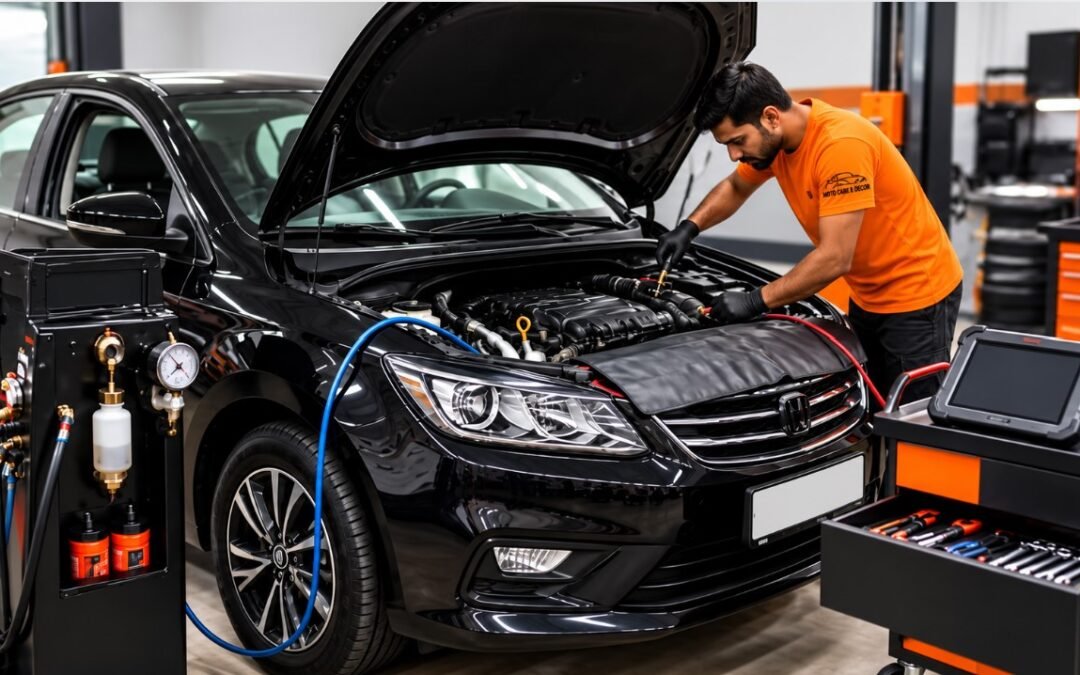
Your vehicle’s engine is one of its most important components, and keeping it in good condition is essential for a smooth and reliable driving experience. Over time, carbon deposits can accumulate inside parts of an engine, particularly in vehicles that experience frequent stop-and-go traffic, short trips or prolonged idling.
This is where engine decarbonisation can become a useful part of professional vehicle maintenance. Engine decarbonisation is a service intended to help address carbon deposits and support better engine operation when appropriate for the vehicle.
What Is Engine Decarbonisation?
Engine decarbonisation is a vehicle maintenance process designed to help remove or reduce accumulated carbon deposits from relevant engine components.
Carbon deposits can develop as a result of the combustion process. Over time, deposits may accumulate in areas such as the intake system, combustion chamber or other components, depending on the engine type, fuel system and operating conditions.
Professional engine carbon cleaning should be performed using a method and equipment appropriate for the specific vehicle. It is not a substitute for regular servicing, oil changes or repairs when an underlying mechanical problem exists.
Why Do Carbon Deposits Build Up?
Carbon deposits can develop naturally during fuel combustion. Certain driving conditions may contribute to deposit accumulation, including:
- Frequent short-distance journeys
- Heavy city traffic
- Stop-and-go driving
- Extended engine idling
- Poor-quality or contaminated fuel
- Inadequate vehicle maintenance
- Long periods of low-speed driving
Vehicles that spend a significant amount of time in urban traffic may experience different operating conditions compared with vehicles that regularly travel longer distances.
Signs That Your Engine May Need Attention
Carbon buildup is only one possible cause of engine-related symptoms. If you notice changes in vehicle performance, professional diagnosis is recommended rather than assuming carbon deposits are the cause.
Some symptoms that may warrant an engine health check include:
1. Reduced Engine Responsiveness
If the vehicle feels less responsive during acceleration than usual, it may be worth having the engine and related systems inspected.
2. Rough or Uneven Idling
An engine that does not idle smoothly can have several possible causes. A professional inspection can help identify whether carbon deposits or another mechanical or electronic issue is involved.
3. Changes in Fuel Efficiency
A noticeable change in fuel consumption can result from several factors, including tyre pressure, driving conditions, engine condition, sensors and fuel-system issues.
4. Unusual Engine Behaviour
Changes such as hesitation, unusual sounds or inconsistent performance should not be ignored. A diagnostic inspection can help identify the underlying issue.
5. Engine Warning Light
If the check engine light appears, professional diagnostics should be considered. A diagnostic scan can help identify stored fault codes and determine whether further inspection is required.
Benefits of Professional Engine Decarbonisation
When carbon deposits are contributing to a vehicle issue and the appropriate cleaning method is used, engine decarbonisation may support better engine operation.
Potential benefits can include:
- Helping reduce carbon deposits
- Supporting smoother engine operation
- Supporting better throttle response
- Helping maintain engine cleanliness
- Supporting overall engine maintenance
- Providing an opportunity for professional engine inspection
However, results can vary depending on the vehicle's age, engine type, maintenance history and condition.
Engine Decarbonisation Is Not a Replacement for Regular Servicing
One of the most important things car owners should understand is that engine decarbonisation and regular car servicing are different services.
Regular engine maintenance may include:
- Engine oil and filter replacement
- Air filter inspection
- Spark plug inspection for applicable engines
- Coolant checks
- Battery checks
- Brake inspection
- Diagnostic checks
- Manufacturer-recommended maintenance
Engine decarbonisation should be considered as part of an appropriate maintenance strategy rather than a replacement for these essential services.
Why Regular Engine Care Matters
Your engine operates under demanding conditions every time you drive. Regular engine maintenance can help identify potential problems before they become more serious.
A professional vehicle inspection can help assess:
- Engine performance
- Diagnostic fault codes
- Battery condition
- Sensors
- Air intake-related components
- Warning lights
- Service requirements
Keeping track of your vehicle's service history also makes it easier to understand when maintenance may be required.
Engine Decarbonisation for City Driving
Urban driving can place different demands on a vehicle compared with highway driving. Frequent traffic congestion, short journeys, repeated acceleration and braking, and extended idling can affect how a vehicle operates.
For drivers in busy cities such as Bangalore, regular vehicle maintenance becomes particularly important.
If you frequently drive through traffic-heavy areas, consider following your vehicle manufacturer's recommended service schedule and getting professional inspections whenever you notice changes in engine performance.
How Does Engine Decarbonisation Work?
The exact process depends on the vehicle, engine design and decarbonisation equipment being used.
A professional service may involve:
1. Vehicle Assessment
The vehicle is inspected to understand its condition and determine whether carbon cleaning is appropriate.
2. Diagnostic Check
Relevant engine systems may be checked for warning codes or other issues.
3. Decarbonisation Service
An appropriate professional cleaning method is carried out using suitable equipment.
4. Final Inspection
The vehicle is checked after the service to assess its overall condition and identify whether additional maintenance is required.
The process should always be performed according to the requirements of the specific vehicle.
Who Should Consider Engine Decarbonisation?
There is no universal interval at which every vehicle needs engine carbon cleaning. The requirement depends on factors such as:
- Vehicle type
- Engine type
- Mileage
- Driving conditions
- Maintenance history
- Fuel system
- Manufacturer recommendations
- Existing engine symptoms
Instead of performing decarbonisation solely based on a fixed mileage, it is better to have the vehicle assessed by a qualified professional when there is a relevant maintenance reason.
Common Myths About Engine Decarbonisation
Myth 1: Every Vehicle Needs Frequent Decarbonisation
Not necessarily. Different engines and vehicles have different maintenance requirements. Follow manufacturer recommendations and professional advice.
Myth 2: Decarbonisation Fixes Every Engine Problem
No. Engine problems can have many causes. Engine diagnostics should be used to identify the underlying issue rather than assuming carbon buildup is responsible.
Myth 3: Decarbonisation Replaces Engine Servicing
It does not. Regular servicing, oil changes, inspections and manufacturer-recommended maintenance remain important.
Myth 4: A Cleaning Service Guarantees Better Mileage
There is no guarantee that every vehicle will experience improved fuel economy after decarbonisation. Results depend on the vehicle's condition and the actual cause of any performance issue.
Engine Health Check and Diagnostics
Before carrying out any major engine-related service, a professional car health check can be useful.
Modern diagnostic equipment can help check areas such as:
- Fault codes
- Sensors
- Battery condition
- ABS system
- Airbag system
- Service-reset requirements
A diagnostic check can help distinguish between potential carbon-related concerns and other vehicle problems.
Engine Care Checklist
For better long-term engine maintenance, car owners should:
✓ Follow the manufacturer's service schedule
✓ Change engine oil at recommended intervals
✓ Replace filters when required
✓ Monitor dashboard warning lights
✓ Check coolant levels
✓ Pay attention to unusual engine sounds
✓ Monitor changes in vehicle performance
✓ Maintain appropriate tyre pressure
✓ Get diagnostic checks when warning signs appear
✓ Consider professional engine inspection when required
Engine Decarbonisation at Moto Care & Decor
At Moto Care & Decor, we provide professional engine decarbonisation and vehicle diagnostic services as part of our complete automotive solutions.
Our approach focuses on understanding the vehicle's condition and providing appropriate maintenance support. Engine care can be combined with other services such as car health checks, diagnostics, wheel alignment, tyre care, vehicle washing and general vehicle maintenance.
Our goal is simple: to help customers keep their vehicles well-maintained, reliable and ready for the road.
Final Thoughts
Engine decarbonisation can be a useful vehicle maintenance service when carbon deposits are relevant to the vehicle's condition. However, it should be considered alongside regular servicing, professional diagnostics and manufacturer-recommended maintenance.
If you notice reduced engine responsiveness, rough idling, unusual engine behaviour or warning lights, don't simply assume carbon buildup is the problem. A proper engine diagnostic check can help identify the actual cause.
Regular engine care, timely maintenance and professional vehicle inspections can help you take better care of your vehicle and enjoy a smoother driving experience.
Take care of your engine today. Keep your vehicle ready for tomorrow.